Introduction
Following Matthew 2, the gospel ofMatthew jumps more than 30 years and begins with the ministry of John the Baptist. Matthew does not share anything about John’s background, but Luke gives us his story.
- Read Luke 1:5-24; 57-77
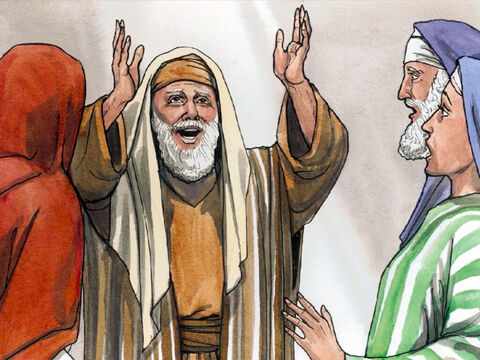
Important to the background of John the Baptist is his father, Zacharias’ prophesy in Luke 1:68-79:
Blessed be the Lord God of Israel,
for he has visited and redeemed his people
and has raised up a horn of salvation for us
in the house of his servant David,
as he spoke by the mouth of his holy prophets from of old,
that we should be saved from our enemies and from the hand of all who hate us;
to show the mercy promised to our fathers
and to remember his holy covenant,
the oath that he swore to our father Abraham, to grant us
that we, being delivered from the hand of our enemies,
might serve him without fear,
in holiness and righteousness before him all our days.
And you, child [John], will be called the prophet of the Most High;
for you will go before the Lord to prepare his ways,
to give knowledge of salvation to his people
in the forgiveness of their sins,
because of the tender mercy of our God,
whereby the sunrise shall visit us from on high
to give light to those who sit in darkness
and in the shadow of death,
to guide our feet into the way of peace. (Luke 1:68-79, ESV)
Outline: We are in part 2 of our outline of the gospel of Matthew.
Jesus’ early ministry (Matthew 3:1-4:11)
- The ministry of John the Baptist (Matthew 3:1-12)
- John baptizes Jesus (Matthew 3:13-17)
The Ministry of John the Baptist
John was born to be the forerunner of Christ. An angel told John’s father, Zechariah, about John’s birth.
Now while he [Zechariah] was serving as priest before God when his division was on duty, according to the custom of the priesthood, he was chosen by lot to enter the temple of the Lord and burn incense. And the whole multitude of the people were praying outside at the hour of incense. And there appeared to him an angel of the Lord standing of the right side of the altar of incense. And Zechariah was troubled when he say him, and fear fell upon him. But the angel said to him, “Do not be afraid, Zechariah, for your prayer has been heard, and your wife Elizabeth will bear you a son, and you shall call his name John. And you will have joy and gladness, and many will rejoice at his birth, for he will be great before the Lord. And he must not drink wine or strong drink and he will be filled with the Holy Spirit, even from his mother’s womb. And he will turn many of the children of Israel to the Lord their God, and he will go before him in the spirit and power of Elijah, to turn the hearts of the fathers to the children, and the disobedient to the wisdom of the just, to make ready for the Lord a people prepared.” (Luke 1:8-17, ESV, emphasis added)
John’s birth and ministry was a fulfillment of Isaiah’s prophecy. Isaiah’s ministry was from about 740 B.C. to 681 B.C. so his prophecy regarding John the Baptist came approximately 700 years before the angel appeared to Zechariah.
A voice cries
In the wilderness prepare the way of the LORD;
make straight in the desert a highway for our God.
(Isaiah 40:3, ESV)
Matthew confirms that this is a prophecy about John the Baptist in Matthew 3:3 when he quotes Isaiah 40:3.
Let’s take a closer look at what Matthew tells us about John’s ministry.
In those days John the Baptist came preaching in the wilderness of Judea, “Repent, for the kingdom of heaven is at hand.” For this is he who was spoken of by the prophet Isaiah when he said, “The voice of one crying inn the wilderness: Prepare the way of the Lord: make his paths straight.” Now John wore a garment of camel’s hair and a leather belt around his waist, and his food was locust and wild honey. Then Jerusalem and all Judea and all the region about the Jordan were going out to him, and they were baptized by him in the river Jordan, confessing their sins.
But when he saw many of the Pharisees and Sadducees coming to his baptism, he said to them, “You brood of vipers! Who warned you to flee from the wrath to come? Bear fruit in keeping with repentance. And do not presume to say to yourselves, ‘We have Abraham as our father,’ for I tell you, God is able from these stones to raise up children of Abraham. Even now the axe is laid to the root of the trees. Every tree therefore that does not bear good fruit is cut down and thrown into the fire.
I baptize you with water for repentance, but he who is coming after me is mightier than I, whose sandals I am not worthy to carry. He will baptize you with the Holy Spirit and fire. His winnowing fork is in his hand, and he will clear his threshing floor and gather his wheat into the barn, but the chaff he will burn with unquenchable fire.” (Matthew 3:1-12, ESV)
Matthew starts at the beginning of John’s ministry but does not tell us his full story. If you went back and read Luke, chapter one, you surely noted some important facts about John:
- His birth was miraculous. (Luke 1:7)
- His father was a priest from the order of Abijah (See 1 Chronicles 24:1-19 for more on the priestly orders.)
- His mother was a descendant of Aaron. (Luke 1:5)
- He was a prophet (Luke 1:76 and Matthew 11:9)
- He was a Nazarite (Numbers 6:3; Judges 13:4, 7, 14; Matthew 11:8)
- He was filled with the Holy Spirit even before birth (Luke 1:41, 67; Acts 2:4; Isaiah 49:14; Jeremiah 1:5; Galatians 1:15)
- He came before the Messiah (Luke 1:26; John 3:28; Malachi 4:6)
- He had the spirit and power of Elijah (Matthew 11:14)
- His mother, Elizabeth, was related to Jesus’ mother, Mary (Luke 1:36)
The Baptism of John
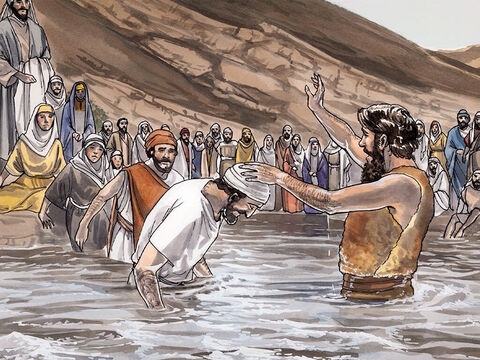
As we just saw in Matthew 1:5-6, John was baptizing people in the Jordan River. This baptism is not to be confused with the believer’s baptism found later in the New Testament. The Apostle Paul pointed out the difference in Acts 19 when he met some of John’s followers who were not yet followers of Christ.
While Apollos was in Corinth, Paul traveled through the interior regions until he reached Ephesus, on the coast, where he found several believers. “Did you receive the Holy Spirit when you believed?” he asked them.
“No,” they replied, “we haven’t even heard that there is a Holy Spirit.”
“Then what baptism did you experience?” he asked.
And they replied, “The baptism of John.”
Paul said, “John’s baptism called for repentance from sin. But John himself told the people to believe in the one who would come later, meaning Jesus.”
As soon as they heard this, they were baptized in the name of the Lord Jesus. Then when Paul laid his hands on them, the Holy Spirit came on them, and they spoke in other tongues and prophesied. There were about twelve men in all. (Acts 19:1-7, NLT)
The believers that Paul encountered in Ephesus identified with John’s message and had repented. However, they had not accepted the finished work of Jesus as the atonement for their sins. Once they heard the truth of the gospel, they accepted Jesus and were baptized as an outward symbol of the inward change. John’s baptism did not save those he baptized, but it did prepare them to receive the atoning work of Christ for their sins.
The Message of John
John the Baptist preached repentance. His message was simple. “Repent, for the kingdom of heaven is near.” (Matthew 3:2)
He preached that straightforward message with boldness. When the Pharisees and Sadducees who were the religious elite of the day showed up at the Jordan where John was baptizing, he called them out referring to them as a “brood of vipers” (Matthew 3:7). This was strong language directed toward some powerful men. Using the imagery of vipers, snakes whose strikes were both subtle and deadly, sent a powerful message to those in attendance. The Pharisees were not only powerful, they were popular among the people, and their strict adherence to their own made-up regulations regarding religious laws was legendary. The Sadducees were a smaller group made up of the wealthier and more aristocratic class, but they too wielded tremendous influence among the people.
John also lets the Pharisees and Sadducees know that they also need to repent. He tells them to “[b]ear fruit in keeping with repentance.” (Matthew 3:8, ESV)
He goes on to tell them that “[e]very tree therefore that does not bear good fruit is cut down and thrown into the fire.” (Matthew 3:10, ESV)
It is obvious that John not only preached the truth about repentance, he preached with a boldness that could only come from the Holy Spirit.
The Prophecy of John
In addition to being the forerunner of Christ, John was a prophet. When the angel foretold John’s birth to Zechariah, he said, “He will be a man with the spirit and power of Elijah.” (Luke 1:17) Zechariah notes in Luke 1:76 that John “will be called the prophet of the Most High.”
Jesus himself refers to John as a prophet in Matthew 11:9. “Were you looking for a prophet? Yes, and he is more than a prophet” (NLT).
John gives a powerful Messianic prophecy in Matthew 3:11-12. “I baptize you with water for repentance, but he who is coming after me is mightier than I, whose sandals I am not worthy to carry. He will baptize you with the Holy Spirit and fire.” (v. 11, ESV) In verse 12, John gives a prophecy that provides us with a picture of the rapture. “His winnowing fork is in his hand, and he will clear his threshing floor and gather his wheat into the barn, but the chaff he will burn with unquenchable fire” (v. 12, ESV).
It is important to note that although John is a New Testament prophet, he was more like the Old Testament prophets because he came before the New Covenant. John’s ministry took place during the Old Covenant because the New Covenant had not yet been established. He was sent to prepare that way for both the Messiah and the New Covenant. (See Hebrews 8:6, Matthew 11:12-14; 2 Corinthians 3:7-11, and 1 Peter 1:11).
Additional Reading
Luke 1:1-25; 57-80
Mark 1:1-8
John 1:6-8; 19-28
 Word of Truth Blog