The Baptism of Jesus
Introduction
Immediately after Matthew introduces John the Baptist and his ministry, he gives an account of the baptism of Jesus. The account of Jesus’ baptism is found is all four gospels.
- Matthew 3:12-16
- Mark 1:9-11
- Luke 3:21-22
- John 1:29-34
The Jordan River
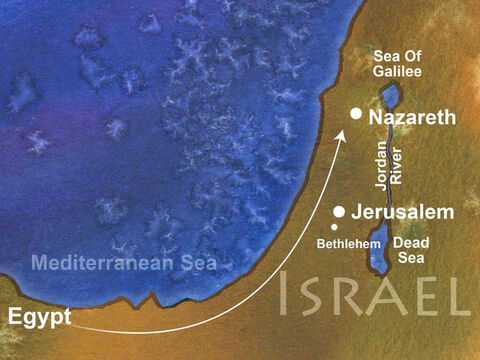
John baptized Jesus in the Jordan River. “In those days Jesus came from Nazareth of Galilee and was baptized by John in the Jordan” (Mark 1:9, ESV, emphasis added).
The Jordan River plays a significant role in biblical history. The river is mentioned nearly 200 times in the Bible.
The first mention is indirect when Abraham and Lot had to separate because their employees were not getting along. Abraham gave Lot the choice of where to settle, and Lot “chose for himself all the Jordan Valley” (Genesis 13:11, ESV). Lot chose the Jordan Valley because “the Jordan Valley was well watered everywhere like the garden of the LORD” (Genesis 13:10, ESV).
The Jordan served as the eastern boundary of the Promised Land (Canaan), and God did not allow Moses to cross the river when the Israelites entered the land to take possession of it.
So Moses continued to speak these words to all Israel. And he said to them, “I am 120 years old today. I am no longer able to go out and come in. The LORD has said to me, ‘You shall not go over this Jordan.’ The LORD your God himself will go over before you. He will destroy these nations before you, so that you shall dispossess them, and Joshua will go over at your head, as the LORD has spoken.” (Deuteronomy 31:1-3, ESV, emphasis added)
It was at Mount Nebo, near the Jordan River, where Moses got his only glimpse of the Promised Land (Deuteronomy 32:48—52).
Of course, it was the Jordan River that God miraculously dried up for the Israelites to cross into the Promised Land (Joshua 3:15-17).
Other Old Testament references to the Jordan River:
- The Israelite tribes of Gad, Reuben, and half of the Manasseh tribe settled on the east side of the Jordan River (Joshua 1:12-18).
- After the Jordan crossing, Joshua set up 12 stones in the Jordan for a memorial (Joshua 4:1-9).
- The prophet Elijah lived near the Jordan River (1 Kings 17:5).
- God parted the Jordan for Elijah and Elisha to cross just before Elijah was taken to heaven in a chariot of fire which happened near the river (2 Kings 2:7-14).
- Elisha told the Syrian commander, Naaman, to bathe in the Jordan to be healed of leprosy (2 Kings 5:1-14).
- It was at the Jordan River that God used Elisha to make a lost axe head float (2 Kings 6:1-6).
The Jordan River figures prominently in the Gospels as a geographic marker:
And great crowds followed him [Jesus] from Galilee and the Decapolis, and from Jerusalem and Judea, and from beyond the Jordan (Matthew 4:25, ESV, brackets and emphasis added).
Now when Jesus had finished these sayings, he went away from Galilee and entered the region of Judea beyond the Jordan (Matthew 19:1, ESV, emphasis added).
And he [Jesus] left there and went to the region of Judea and beyond the Jordan, and crowds gathered to him again (Mark 10:1, ESV, brackets and emphasis added).
Although we don’t know for certain the precise spot of Jesus’ baptisms, the traditional site is Qasr el-Yahad which is on the western bank of the Jordan River. This location is a few miles north of the Dead Sea and six miles east of Jericho. Today, Christian tourists to Israel flock to the site and many are baptized at this spot on the border of Israel and Jordan.
According to Halley’s Bible Handbook, the place of Jesus’ baptism “was the lower Jordan, at, or near, the very spot where the waters divided for Joshua on Israel’s entrance into Canaan.” While we don’t know for sure that this is true, it is an interesting idea.
When looking at the account of Jesus’ baptism in not just Matthew, but in all the Gospels, the obvious question is, “Why was Jesus baptized?” John preached repentance, but Jesus had no need to repent because he was the sinless Lamb of God. John himself protested when Jesus asked to be baptized. He said, “I need to be baptized by you” (Matthew 3:14, ESV). But Jesus response to John was, “Let it be so now, for thus it is fitting for us to fulfill all righteousness” (Matthew 3:15, ESV).
Baptism has always been symbolic. John’s baptism was symbolic of repentance. Believer’s baptism is symbolic of the washing away of our sins when we have accepted Christ as our savior (See Acts 19:1-11).
Jesus’ baptism was also symbolic. “Jesus is baptized as a symbol of giving up His will to His Father and the beginning of His earthly ministry” (BibleStudyTools.com).
Jesus’ baptism is also symbolic of His role as High Priest.
Inasmuch then as the children have partaken of flesh and blood, He Himself [Jesus] likewise shared in the same, that through death He might destroy him who had the power of death, that is, the devil, and release those who through fear of death were all their lifetime subject to bondage. For indeed He does not give aid to angels, but He does give aid to the seed of Abraham. Therefore, in all things He had to be made like His brethren, that He might be and merciful and faithful High Priest in things pertaining to God, to make propitiation for the sins of the people. (Hebrews 9:14-17, NKJV, brackets and emphasis added)
Seeing then that we have a great High Priest who has passed through the heavens, Jesus the Son of God, let us hold fast our confession. (Hebrews 4:14, NKJV, emphasis added)
Jesus’ baptism kicked off His earthly ministry, and according to Luke, he was 30 years old when he was baptized (See Luke 3:23). Both His baptism and His age were significant because of His role as High Priest. According to Levitical law, all priests were to be consecrated when they were about 30 years old (See Numbers 4:3). They were consecrated by washing and anointing. Leviticus, chapter 8, gives an account of Moses preparing Aaron and his sons for service as priests.
And Moses brought Aaron and his sons and washed them with water (Leviticus 8:6, ESV, emphasis added).
Then Moses took the anointing oil and anointed the tabernacle and all that was in it, and consecrated them. And he sprinkled some of it on the altar seven times, and anointed the altar and all its utensils and the basin and its stand, to consecrate them. And he poured some of the anointing oil on Aaron’s head and anointed him to consecrate him (Leviticus 8:10-12, ESV, emphasis added).
Points to Remember
- John felt completely unqualified to baptize Jesus.
- Jesus is Savior, King, Prophet, and Priest. His baptism was an act of cleansing as required by the law. Like priests before Him, He was confessing on behalf of the people. Jesus Himself had no sin to confess. He did not repent because He did not need to.
- By being baptized, Jesus was setting an example for all of His followers, both then and now.
- Jesus’ baptism was a foreshadowing of His death, burial, and resurrection.
- Jesus’ baptism was the beginning of His public ministry.
The Aftermath
After John baptized Jesus, an extraordinary event occurred. “After his baptism, as Jesus came up out of the water, the heavens were opened and he saw the Spirit of God descending like a dove settling on him [Jesus]. And a voice from heaven said, ‘This is my dearly loved Son, who brings me great joy’” (Matthew 3:16-17, NLT, brackets and emphasis added).
This scene from Jesus’ baptism at the beginning of His ministry provides us with one of the clearest pictures of the Trinity in all of Scripture. Jesus and the Holy Spirit (in the form of a dove) are physically present while God’s voice is clearly heard from Heaven proclaiming Jesus to be His Son. What an extraordinary moment!
The Trinity is a difficult doctrine to understand. I have difficulty in explaining it because I do not fully understand it. I believe it because the Bible teaches it, but I cannot claim to understand it. Although the word “trinity’ does not appear anywhere in the Bible, the doctrine of one God existing in three persons, the Father, the Son, and the Holy Spirit is referenced throughout God’s Word.
“He who would try to understand the Trinity fully will lose his mind. But he who would deny the Trinity will lose his soul.” (Harold Lindsell and Charles J. Woodbridge, A Handbook of Christian Truth)
The one-God-in-three-Persons first appears at creation. “Then God said, Let us make man in our image” (Genesis 1:26a, ESV, emphasis added).
The Trinity is also expressed when God banishes Adam and Eve from the Garden after they sinned. “Then the LORD God said, ‘Behold, the man has become like one of us in knowing good and evil” (Genesis 3:22a, ESV, emphasis added).
When Peter preached on the Day of Pentecost, he tells the listeners, “This Jesus God raised up, and of that we all are witnesses. Being therefore exalted at the right hand of God, and having received from the Father the promise of the Holy Spirit, he has poured out this that you yourselves are seeing and hearing” (Acts 2:32-33, ESV, emphasis added).
The Bible is clear that the Father, the Son, and Holy Spirit are all God.
- The Father is God. “Grace to you and peace from God our Father and the Lord Jesus Christ” (Philippians 1:2, ESV, emphasis added)
- Jesus, the Son, is God. “Waiting for our blessed hope, the appearing of the glory of our great God and Savior Jesus Christ” (Titus 2:13, ESV, emphasis added).
- The Holy Spirit is God. “But Peter said, ‘Ananias, why has Satan filled your heart to lie to the Holy Spirit and to keep back for yourself part of the proceeds of the land? While it remained unsold, did it not remain your own? And after it was sold, was it not at your disposal? Why is it that you have contrived this deed in your heart? You have not lied to man but to God’” (Acts 5:3-4, ESV, emphasis added).
Additional verses on the Trinity
- Genesis 11:7
- Deuteronomy 6:4
- Matthew 28:19
- John 1:18
- John 10:30
- John 14:16-17
- John 15:28
- John 17:11 & 21
- 1 Corinthians 12:4-6
- 2 Corinthians 13:14
- Galatians 4:6
- Ephesians 4:4-6
- 1 Peter 1:2
 Word of Truth Blog